

Some armies have been ground to a halt because they’ve run out of gasoline. Others have been rendered useless for want of warm clothes or food. For the Continental Army of 1775, a critical shortage of gunpowder was the problem.
In fact, gunpowder was so scarce it actually threatened to end the American Revolution before it began, according to historian Michael Stephenson in his amazing 2007 book Patriot Battles.
Stephenson describes how at the war’s outset, American general John Sullivan wrote that had the British known how desperately short of powder the colonists were, they could have crushed the entire rebellion in one stroke. In fact, according to one eyewitness, when George Washington discovered that instead of the required 400 barrels of powder needed to supply his army, he could expect fewer than 40, the general was so distraught he was unable to utter a sound for the next half hour. While certainly there was more gunpowder in the 13 colonies at the time — the problem for the Continentals was in finding and procuring it.
In the 18th Century, gunpowder was made using a centuries-old recipe that called for 15 percent charcoal, 10 percent sulphur and 75 percent potassium nitrate (also known as saltpeter). The first two substances were abundant in America, but it was the final ingredient, potassium nitrate, that was hard to come by.
A byproduct of decomposing organic matter, saltpeter could be extracted from animal droppings and urine. In a pinch, human waste could be used to generate it — the urine of those who had consumed booze was particularly effective. Thankfully for those in the gunpowder business, it could also be recovered from tropical soil rich in nitrates from decaying plant matter. While some of the southern American colonies enjoyed conditions favourable for the production of potassium nitrate, at the time of the Revolution, America had virtually no domestic gunpowder industry. Instead the colonies relied on imports from Britain, but later had to get their supply from Europe or French and Dutch colonies in the Caribbean. The British on the other hand had a well-established global trading network and could obtain saltpeter comparatively easily.
So just how bad was the powder shortage for the new American army? In 1775, there was only enough powder on hand to supply soldiers of the Continental Army about 20 cartridges per solider! That might last about 10 minutes on the battlefield. Realizing this, the newly-established American congress organized a hasty program to produce the all-important substance domestically. Building the capacity, particularly the ability to generate potassium nitrate, would take time though. In the interim, the Continental Army would have to husband its supplies carefully. This shortage became an all-consuming obsession for the rebellion’s leaders. John Adams wrote in 1775 that the production of saltpeter was never far from his mind.
Eventually, production was ramped up in the southern colonies when it was realized that the soil left over on the barn floors of tobacco plantations was rich in nitrates. One barrel of it mixed with ashes and water and then boiled and refined could produce the saltpeter needed for nearly a pound of gunpowder.
According to Stephenson, by the end of 1777, more than 100,000 pounds of gunpowder had been manufactured for the Continental Army, but even that still wasn’t sufficient. In fact, domestic production only accounted for a tenth of the gunpowder used by America during the revolution. The balance being delivered by French, despite the British blockade of the colonies.
John Adams wrote that had the Royal Navy’s cordon around America been effective enough to prevent the French from supplying the colonies with gunpowder, the rebellion might easily have failed and America might have remained in British hands.
Did you find this article interesting? Please feel free to Tweet it or share it on Facebook. We’ve been running this blog for a month and would love to see more traffic. As always, your feedback is welcome.


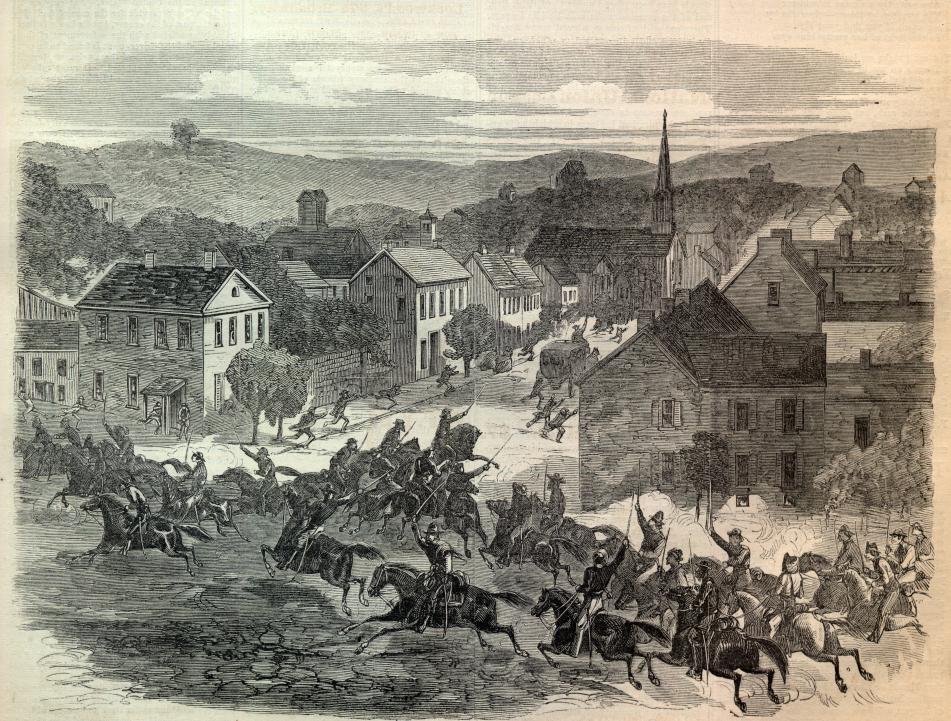


The amazing thing is, that things still had not changed that much by the time of the Civil War. At times the Confederates had the very same problem, even though they had the resources. They just did not have enough of them. Same with bronze for cannons… many churches in the south had to go without bells by the end of the war.
But this is a story that goes on throughout history. Look at Germany by the end of WWII or even NATO last year, wen they ran out of bombs for the campaign over Lybia.
Thanks for the note… yeah. That’s certainly true about the Confederacy as well as the Continentals. I seem to recall even patriotic southern urine drives that would help with the production of saltpeter for gunpowder.
I think there is a whole chapter dedicated to this in McPherson’s “Battlecry for freedom” which is very detailed about the resource shortcomings of the Confederacy and how their inability to trade (mostly due to the Union blockade and the loss of ports and partly to Britains reluctance to trade with a nation that produced its goods through slavery) was one of the deciding factors to cost them the war.
“Battle Cry” is on my night stand. It’s third in line. I’ve got my summer fiction to get through first, plus I’ll have to mark the 200th of 1812 by re-reading Pierre Berton’s Invasion of Canada at some point.